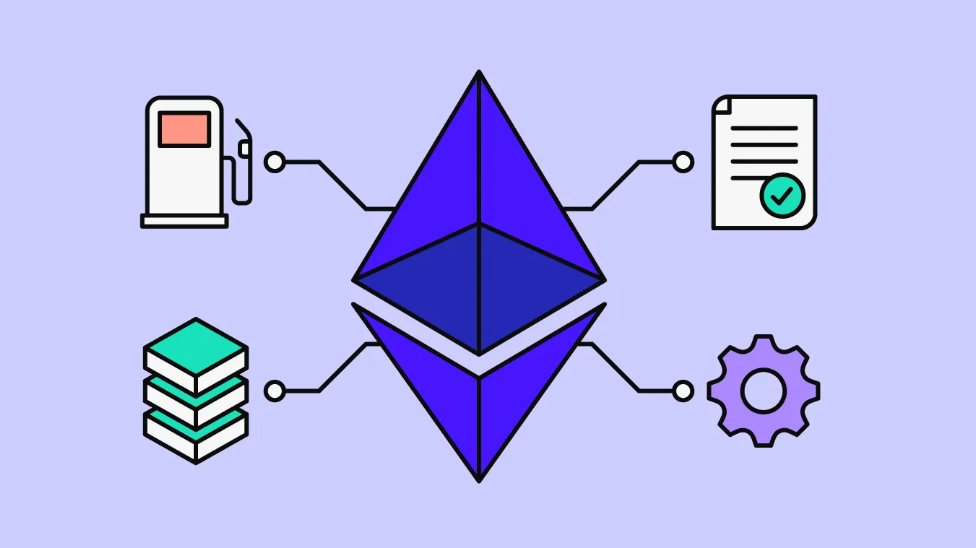
Ethereum is a decentralized, open-source platform that enables programmable money and complex applications via smart contracts and the Ethereum Virtual Machine (EVM). It serves as a global ledger and secure execution environment where transactions consume ETH gas to power computations. This design supports interoperable, trust-based systems, standardized interfaces, and modular tooling for decentralized apps, governance, and security. Its ecosystem connects developers, users, and businesses, presenting opportunities—and challenges—that invite closer examination. The question remains: what practical impact will this architecture have next?
Ethereum in Plain English: What It Is, How It Works, and Why It Matters
Ethereum is a decentralized, open‑source platform that enables programmable money and complex applications through smart contracts and the Ethereum Virtual Machine (EVM).
It operates as a ledger and execution environment, where transactions consume eth gas to power computations.
Users and developers access decentralized finance (defi liquidity) and programmable rules, enabling autonomous, permissionless interactions without intermediaries.
Smart Contracts and the EVM: A Practical Primer
Smart contracts are self‑executing agreements coded to enforce their terms without intermediaries, running on the Ethereum Virtual Machine (EVM) which provides a deterministic, sandboxed execution environment.
The virtual machine interprets bytecode, enabling programmable logic and state changes that are transparent, auditable, and autonomous. Developers deploy, verify, and interact with these contracts, ensuring predictable outcomes within a permissioned, open ecosystem.
Use Cases and the Ethereum Ecosystem
The discussion outlines ecosystem fundamentals, including governance, security, and interoperability, while emphasizing developer tools, deployment patterns, and token standards.
Clarity arises from modular design, standardized interfaces, and composable primitives that empower freedom-seeking participants to build trusted, interoperable solutions.
Getting Started: Developers and Everyday Users
Getting started for developers and everyday users centers on approachable onboarding, clear responsibilities, and interoperable tooling. The path emphasizes modular, standards-based interfaces, with SDKs and testnets easing risk-free experimentation. Users weigh transition risks and governance clarity, while developers assess security patterns and upgrade processes. Scalability tradeoffs emerge between throughput and cost, guiding architecture decisions toward interoperability, resilience, and long-term freedom.
Conclusion
Ethereum advances programmable trust and decentralized computation, quietly reshaping digital interaction. Its smart contracts and EVM provide a formal substrate for interoperable apps, governance, and value exchange, while gas mechanics align effort with scarcity. Adoption expands user and developer tooling, gradually shifting reliance from centralized intermediaries to open, permissionless protocols. In this evolving landscape, stakeholders seek efficiency, resilience, and clarity—ambitions that, when carefully balanced, tend to nurture broader, more inclusive digital ecosystems.